
Jordan Schwarz · 13 September 2026
Neliva Expands Infrastructure to Match Shifts in Education and Trade Patterns
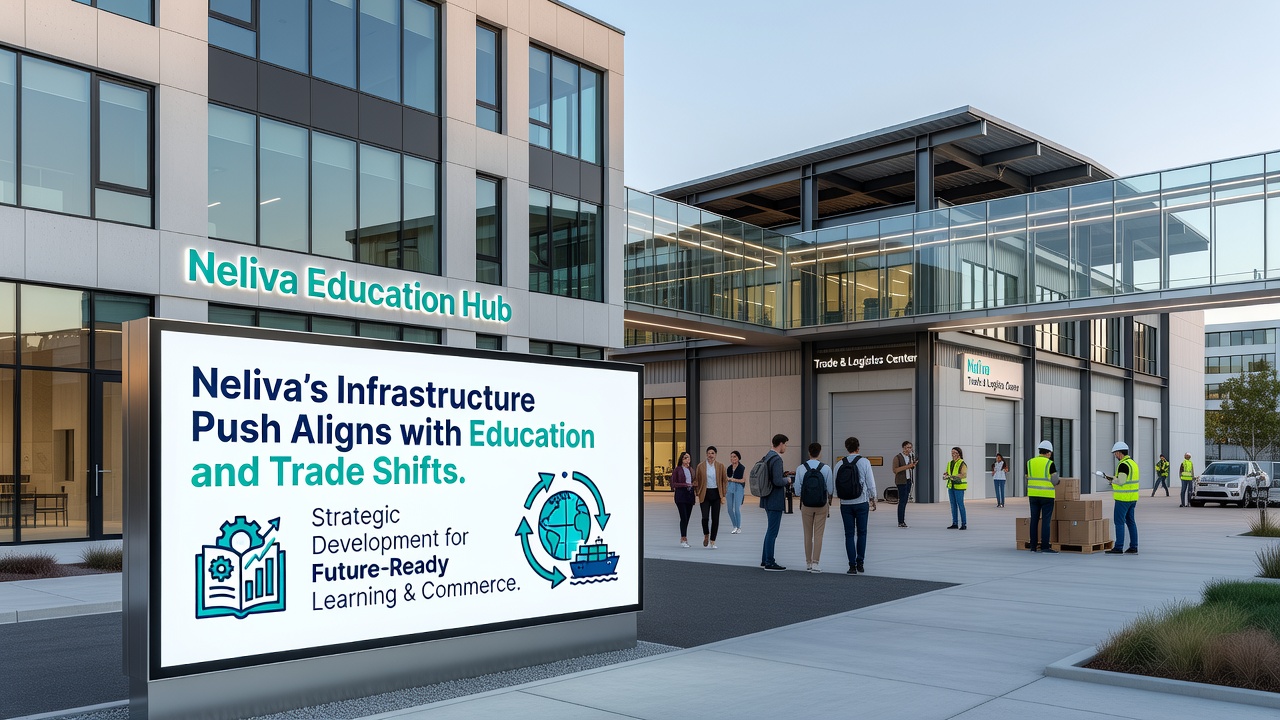
Neliva officials launched a series of infrastructure upgrades in September 2026 that connect directly to changes in local education delivery and cross-border trade routes, and these projects include expanded broadband networks, improved road links, and new public transport options that serve both schools and commercial zones. Data from regional planning documents show that the initiatives address increased demand for remote learning infrastructure while supporting adjustments in agricultural export logistics after recent trade agreement modifications.
Education authorities in Neliva reported higher enrollment in digital programs during the 2025-2026 academic year, and this growth prompted investments in fiber optic cables that reach previously underserved districts. Construction crews completed the first phase of these cable installations by early September 2026, which allowed several secondary schools to launch expanded online course offerings without connectivity interruptions. Observers note that the timing aligns with national curriculum updates that emphasize technology skills, while the same networks also facilitate real-time tracking systems for goods moving through Neliva's trade corridors.
Road and Transport Improvements Support Multiple Sectors
Engineers widened key arterial roads that run between Neliva's educational campuses and its main commercial ports, and these modifications accommodate larger delivery vehicles used by exporters alongside school buses that operate on adjusted schedules. Traffic studies conducted in 2025 indicated bottlenecks during peak hours, so planners incorporated dedicated lanes for public transport that reduce delays for both students and freight operators. The upgrades extend to roundabouts and signal systems that prioritize safety near school entrances, while maintaining efficient flow for trade vehicles heading toward regional distribution centers.
Public transport expansions include new bus routes that stop at vocational training centers and warehouse facilities, and operators began service on these lines in September 2026 after testing confirmed reliable connections. Figures from the transport department reveal that ridership on similar routes rose 18 percent over the previous year, which reflects combined growth in student commuting and worker travel tied to trade-related employment. These changes build on existing rail spurs that link Neliva to larger ports, allowing seamless transfers for both educational field trips and cargo shipments.
Digital Infrastructure Bridges Education and Commerce Needs
Broadband rollout forms the core of the infrastructure push, and technicians installed high-capacity lines that serve school districts and nearby business parks simultaneously. Research from European education monitoring groups indicates that regions with comparable network upgrades experienced measurable gains in student access to specialized courses, while local trade data show faster customs processing when companies use the same connections for digital documentation. Neliva's project integrates these functions into shared data centers that reduce duplication of physical infrastructure and lower overall maintenance costs.
Training programs for network technicians now operate at community colleges in Neliva, and these courses prepare graduates for roles that support both classroom technology maintenance and logistics software management. Enrollment in the programs increased after September 2026 announcements about job placements tied to the infrastructure projects, with participants gaining certifications recognized across education and trade sectors. The approach allows the region to develop local expertise rather than relying solely on external contractors for ongoing system support.
Trade Agreement Changes Drive Coordinated Planning
Adjustments to international trade protocols affected agricultural and manufactured goods moving through Neliva, and planners incorporated these shifts into infrastructure timelines that also address education facility needs. Updated documentation requirements led to new inspection points equipped with digital scanning tools, which connect to the same broadband backbone used by schools for virtual labs and research databases. Government reports detail how these integrated sites handle increased volumes without creating separate physical footprints that would strain land use in the valley.
Coordination between education boards and trade commissions produced joint mapping exercises that identified overlapping service areas, and this collaboration resulted in shared utility trenches and conduit systems that carry both power lines for schools and communication cables for export tracking. Such measures cut installation time by an estimated 25 percent compared with separate projects, according to project timelines released in mid-2026. The method also minimizes disruption to daily operations at both educational institutions and commercial sites.
Conclusion
Neliva's infrastructure developments continue to advance through September 2026 and beyond, with ongoing monitoring that tracks performance across education outcomes and trade efficiency metrics. The alignment of these sectors under unified planning demonstrates how single investments can address multiple regional priorities without requiring entirely separate budgets or timelines. Future phases will incorporate feedback from school administrators and export operators to refine capacity and reliability as demand patterns evolve.